Call Us:+91-9920234749, +91-9833420909 info@studyandworkabroad.in

Best Vocational Training in New Zealand for International Students: Top Courses for PR

If you’re an international student looking to study abroad with a clear path to permanent residency, New Zealand sits near the top of the list for good reason. The country has a well-structured education system, a genuine demand for skilled workers, and immigration policies that actually reward people who train in the right fields. This guide breaks down everything you need to know about vocational training in New Zealand which courses make sense for PR, where to study, and how the visa process works.
Why Choose Vocational Training in New Zealand?
New Zealand’s vocational education system is built around one thing: real-world skills. Unlike a traditional university degree that can take three to four years and cost significantly more, vocational courses are shorter, more affordable, and directly tied to what employers need on the ground.
Here’s why so many international students are choosing this route:
- Shorter duration: Most diploma and trade courses run between 6 months and 2 years
- Lower tuition: Vocational programs typically cost NZD 10,000–25,000 per year, compared to NZD 25,000–45,000+ for degree programs at universities
- Hands-on learning: The curriculum is designed in partnership with industries, so what you learn is immediately applicable
- PR potential: Many vocational fields align directly with New Zealand’s Green List occupations, which offer a structured pathway to permanent residency
New Zealand has around 16 government-run Institutes of Technology and Polytechnics (ITPs), plus approximately 100 privately owned training establishments offering NZQA-approved courses across a wide range of sectors. All qualifications sit within the New Zealand Qualifications Framework (NZQF), which gives your certification national and international credibility.
Understanding New Zealand’s Green List and PR Pathway
Before picking a course, it’s worth understanding how the PR system works — because it should inform your decision.
New Zealand’s Green List is the country’s official register of in-demand occupations. It has two tiers:
- Tier 1 (Straight to Residence): If you secure a job in one of these roles, you can apply for a resident visa almost immediately
- Tier 2 (Work to Residence): You work in a listed role for 24 months and then apply for residency
The list includes roles in healthcare, engineering, construction, ICT, education, and skilled trades. From August 2025, Immigration New Zealand also added ten trades occupations to the Work to Residence pathway, making this an even more viable route for vocational graduates.
The Skilled Migrant Category (SMC) is another option. New Zealand announced changes to the SMC framework in 2025, including a dedicated Trades and Technician pathway that comes into effect in August 2026. This pathway is specifically designed for people with trade qualifications and relevant work experience.
The bottom line: if you pick a course for PR in New Zealand that leads to a Green List occupation, you have a clear, documented pathway to residency not just a vague hope.
Best Vocational Courses in New Zealand for PR
- Nursing and Healthcare
This is consistently one of the most in-demand fields in the country. Registered nurses, enrolled nurses, anaesthetic technicians, medical imaging technologists, and several other healthcare roles feature prominently on the Green List.
Completing a diploma or degree in nursing in New Zealand requires registration with the Nursing Council, but once you’re registered and employed, the residency pathway is direct. Healthcare programs are available at institutions like Unitec, Wintec, and the Eastern Institute of Technology (EIT).
Approximate tuition: NZD 30,000–50,000 per year
English requirement: IELTS 6.5+ (often higher for healthcare)
PR pathway: Tier 1 or Tier 2 Green List
- Construction and Civil Engineering Trades
New Zealand has significant infrastructure demands, and trades like plumbing, electrical work, carpentry, and civil construction are consistently short-staffed. Occupations such as drainlayer, electrician, gasfitter, plumber, and metal fabricator appear on the Green List, meaning graduates who qualify and find employment in these roles have direct access to residency pathways.
Trade courses in this area are offered at polytechnic courses NZ institutions like Unitec (Auckland), Ara Institute of Canterbury (Christchurch), and Wintec (Hamilton). Programs typically run 1–2 years and involve substantial practical, on-the-job training components.
Approximate tuition: NZD 10,000–20,000 per year
PR pathway: Tier 2 Green List (Work to Residence) / SMC Trades Pathway (from August 2026)
- Information Technology
IT is a sector where New Zealand actively recruits overseas talent. Software development, cybersecurity, network engineering, and technical support all fall under vocational and diploma programs in New Zealand. Software development, cybersecurity, networking, and technical support are among the IT areas available in vocational training at institutions across the country.
IT diploma courses are shorter and more job-focused than a computer science degree, and many institutions offer graduate outcomes that align with roles on the Green List or the broader skilled worker pool.
Approximate tuition: NZD 12,000–22,000 per year
PR pathway: Skilled Migrant Category / Green List (ICT roles)
- Hospitality and Culinary Arts
New Zealand’s tourism and hospitality sector has rebounded strongly, and there’s consistent demand for trained hospitality professionals. Diploma programs in hotel management, culinary arts, and event management are well-regarded and often shorter in duration making them popular among international students looking for affordable vocational training in New Zealand.
The Pacific International Hotel Management School (PIHMS) in New Plymouth is one of the more specialized institutions for hospitality, and ICL Business School in Auckland also offers programs in this field. Both institutions are listed under the New Zealand section of Study And Work Abroad, a study abroad consultancy that works with international students navigating institution selection and visa processes.
Approximate tuition: NZD 15,000–28,000 per year
PR pathway: May qualify under SMC depending on employment level and earnings
- Engineering Technology
Engineering diplomas covering areas like mechanical, electrical, and civil engineering technology are solid choices for students who want practical engineering training without committing to a full four-year degree. These qualifications can also serve as a stepping stone into degree programs at universities like Auckland University of Technology (AUT) or Massey University if you decide to continue studying later.
Many engineering technician roles also fall within Green List or SMC-eligible categories, particularly in the infrastructure and construction sectors.
Approximate tuition: NZD 18,000–30,000 per year
PR pathway: Green List (engineering roles) / SMC
- Agriculture and Dairy Farm Management
Primary industries like agriculture and dairy farming are included in New Zealand’s Green List, with dairy farm managers and agricultural science roles among the in-demand positions. This makes agricultural diploma courses particularly interesting for students from farming backgrounds who want to build on existing knowledge and transition into a skilled worker role in New Zealand.
Lincoln University (Canterbury) is New Zealand’s specialist agricultural and environmental university, and it offers diploma-level pathways. Wintec also offers agriculture programs.
Approximate tuition: NZD 14,000–22,000 per year
PR pathway: Green List (Dairy Cattle Farm Manager and related roles)
Top Vocational Training Institutes in New Zealand
Here’s a quick overview of the key institutions for international students:
| Institution | Location | Key Areas |
| Unitec | Auckland | Trades, engineering, IT, health |
| Wintec | Hamilton | Agriculture, business, trades |
| Eastern Institute of Technology (EIT) | Napier/Gisborne | Nursing, hospitality, IT |
| Ara Institute of Canterbury | Christchurch | Engineering, trades, hospitality |
| PIHMS | New Plymouth | Hotel management |
| ICL Business School | Auckland | Business, hospitality |
| Southern Institute of Technology (SIT) | Invercargill | Various vocational programs |
Study And Work Abroad (studyandworkabroad.in) covers several of these institutions in detail, including Unitec, Wintec, EIT, PIHMS, and ICL Business School useful if you’re in the early stages of comparing programs and want institutional-level information alongside visa guidance.
New Zealand Student Visa: What You Need to Know
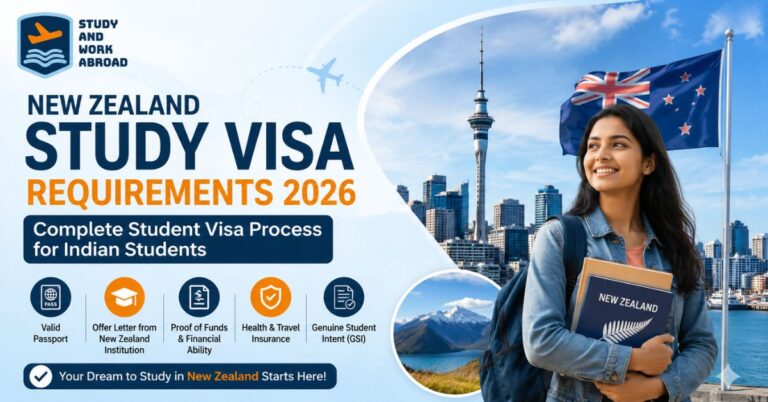
Getting a New Zealand student visa requires a few key things:
- Offer of Place from a registered New Zealand education provider
- Proof of funds you’ll need to show enough to cover tuition and living costs (around NZD 15,000–20,000 per year for living expenses)
- English proficiency IELTS (usually 5.5–6.5 depending on the course), TOEFL iBT, or PTE Academic
- Medical and police clearance documents
- Valid passport
International students on a student visa can work up to 20 hours per week during the semester and full-time during scheduled breaks. This is especially useful for students in trade programs who can gain real work experience while studying.
How to Choose the Right Course for PR in New Zealand
Which course is best for PR in New Zealand? Here’s a simple framework:
- Check the Green List — see if your target occupation is Tier 1 or Tier 2 at the Immigration New Zealand website
- Match your course to a Green List role — pick a qualification that directly qualifies you for that occupation
- Choose an NZQA-approved institution — this is non-negotiable for visa purposes and qualification recognition
- Factor in registration requirements — some fields (nursing, engineering, teaching) require professional registration after graduation, which takes time and adds steps
- Look at the salary thresholds — Green List roles have minimum wage requirements; make sure the field you choose has realistic earning potential that meets those thresholds
Scholarships and Financial Aid
Cost is a real consideration for most international students. A few options worth knowing about:
- New Zealand International Scholarships (NZIS): Government-funded scholarships for students from eligible developing countries
- New Zealand Vocational Short-Term Training Scholarships: Offered to professionals from Pacific Island nations and select other countries for 1-week to 12-month training programs in New Zealand
- Institution-specific scholarships: Unitec, Wintec, and several other polytechnics offer scholarships for international students; eligibility varies
- Private bursaries: Various industry bodies offer funding, particularly in healthcare and construction sectors where skill shortages are acute
Final Thoughts
Vocational training in New Zealand offers a practical, relatively affordable, and well-structured route for international students who want to study, work, and eventually settle in the country. The key is picking a course that maps to a skilled occupation preferably one on the Green List and then choosing an NZQA-approved institution that delivers quality, industry-connected training.
If you’re still in the research phase, Study And Work Abroad (studyandworkabroad.in) provides destination-specific information on New Zealand institutions, including polytechnics and universities, and can help you compare options based on your career goals and background.
The path from student to permanent resident in New Zealand is real, but it takes planning. Start with the right course, understand the immigration system, and the rest tends to follow.
Frequently Asked Questions
Q1: Which vocational courses in New Zealand lead to PR most directly?
Nursing, electrical trades, plumbing, civil construction, and ICT roles offer the most direct paths to PR because they align closely with the Green List. Trade graduates who work 24 months in a listed role can apply for the Work to Residence visa, which converts to permanent residency.
Q2: What is the minimum English score needed to study in New Zealand?
For most diploma and vocational courses, you need an IELTS score of 5.5 to 6.0. Healthcare and education programs often require 6.5 or higher. PTE Academic and TOEFL iBT scores are also widely accepted. Check each institution’s specific requirements before applying.
Q3: Can I work while studying on a New Zealand student visa?
Yes. International students on a full-time New Zealand student visa can work up to 20 hours per week during the academic semester and unlimited hours during official semester breaks. This makes part-time work a realistic option, especially for students in vocational programs.
Q4: How long does it take to qualify for PR after completing a vocational course?
It depends on the pathway. Under the Green List Tier 2 (Work to Residence) route, you need 24 months of full-time paid work in an eligible role after graduation. Under the Skilled Migrant Category, you typically need to meet a points threshold based on qualifications, job offer, and earnings. In practice, most vocational graduates can apply for residency within 2–4 years of completing their studies.
Q5: Are NZQA-approved diploma courses from polytechnics recognized for immigration purposes?
Yes. Qualifications from NZQA-approved institutions on the New Zealand Qualifications Framework (NZQF) are recognized by Immigration New Zealand for visa and residency applications. However, some professions also require separate registration with a professional body nursing, engineering, and teaching are examples. Make sure you understand both requirements before enrolling.